
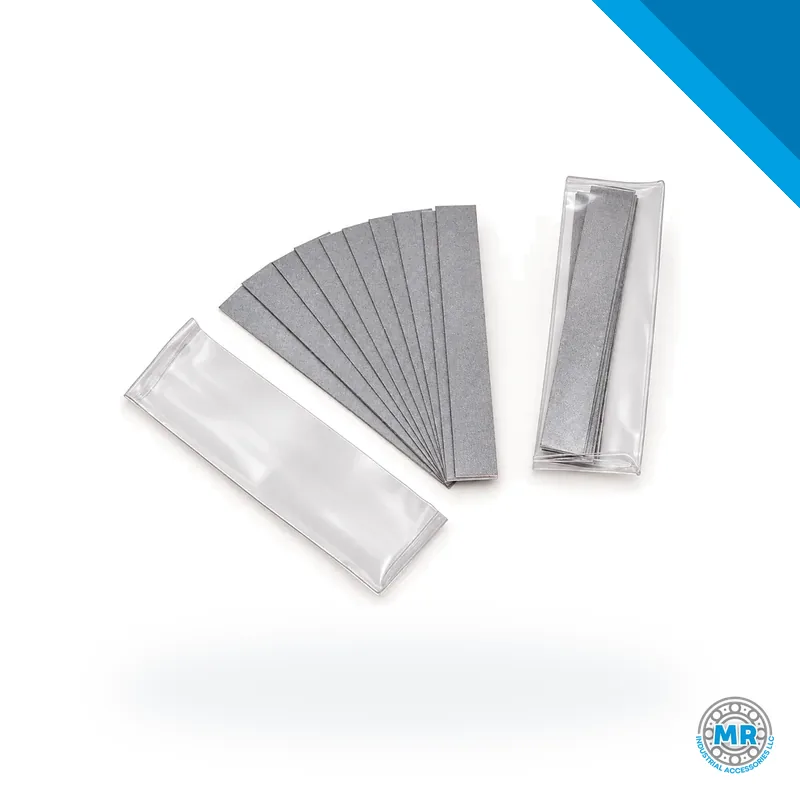

SKF TKRT 10-ADAPT tachometer
- Brand
- SKF
- Category
- Mounting and maintenance tools
- Subcategory
- Mounting and maintenance tools
We reply promptly.
Tell us the quantity you need and request a quote by WhatsApp or email.
Can't find the exact model? Tell us the part number or model you need. We'll track it down and quote it, whether or not it appears in our catalog.
Description
SKF TKRT 10-ADAPT belongs to tachometer, part of our Mounting and maintenance tools range. Tell us how many you need by WhatsApp or email and we'll get back to you promptly with a quote for TKRT 10-ADAPT and any equivalents.
The SKF TKRT is a handheld tachometer that reads rotational speed either without touching the shaft or by direct contact. Maintenance teams use it to confirm RPM at startup, during troubleshooting and in routine predictive work. Switching between modes lets you aim a laser at a reflective mark from a distance, or press a conical tip or measuring wheel against the rotating part.
In the SKF numbering, TKRT points to the tachometer family. The characters after it, such as in TKRT 10-ADAPT, define the specific model or configuration. ADAPT signals that the kit ships with adapters for different measuring jobs, for instance contact tips or a measuring wheel. For an accurate quote, copy the full part number from the label on the instrument, since each version can contain a different set of accessories.
Typical settings include motor speed checks, blowers, centrifugal pumps, conveyor drives and machine spindles. Technicians also use these meters when verifying variable frequency drive output and during rotor balancing. Optical readings suit points that are hard to reach or where moving parts are exposed, which lowers risk. Contact readings give a direct value when the shaft end is accessible.
Choosing the right accessory comes down to how you will measure. Optical mode works on shafts carrying a reflective mark and allows a wider working distance. Contact mode fits shaft ends or surfaces where tape cannot be applied. Use the conical tip on shaft centers and the measuring wheel on cylindrical surfaces. Before each reading, confirm the battery has charge and that the reflective mark is clean. In contact mode, keep the pressure light and aligned so the shaft is not slowed and the instrument is not damaged. Schedule periodic calibration based on how often the tool is used.
SKF TKRT units can stand in for other portable RPM meters, provided the speed range and the required measuring mode match. Part numbers are not interchangeable across manufacturers, and each model carries its own accessories and specifications. When sourcing a replacement, compare the measuring mode, the range and the tip or wheel type first. If anything is unclear, the original part number remains the most reliable reference for an equivalent.
To request an SKF TKRT tachometer or its adapters, send the complete part number by WhatsApp or email. Our team helps you pick the configuration that fits your application and can suggest equivalents. If you have the instrument on hand, we can also help you read the designation.
Dimensions
Dimensions and tolerances: Message us the part number on WhatsApp and we'll verify its dimensions and version with the manufacturer's datasheet.
Frequently asked questions
- What is the difference between optical and contact mode?
- Optical mode reads speed from a distance using a laser aimed at a reflective mark, which is useful for hard-to-reach points. Contact mode requires touching the rotating element with a tip or wheel and returns a direct reading. Most instruments in this line offer both.
- How do I know which adapter my tachometer needs?
- It depends on the measuring method and how you can access the shaft. A conical tip fits shaft centers; a measuring wheel fits cylindrical surfaces. Send the unit's part number by WhatsApp and we will identify the correct adapter for your application.
- Can the SKF TKRT tachometer be calibrated?
- Yes, these instruments support periodic verification and adjustment. How often depends on use and working conditions. Follow the manufacturer's instructions, and if readings become erratic, contact us to discuss calibration.