
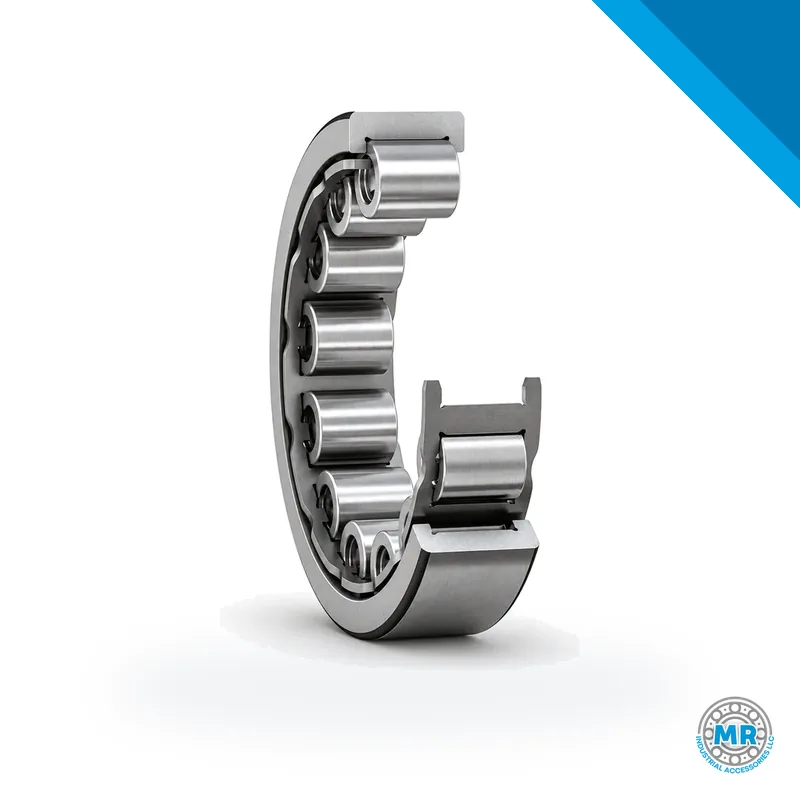

SKF RNU 207 ECJ cylindrical roller bearing
- Brand
- SKF
- Category
- Bearings
- Subcategory
- Cylindrical roller bearings
We reply promptly.
Tell us the quantity you need and request a quote by WhatsApp or email.
Other brands for this category
Ask us for alternatives. We check every equivalent against the part number and your application.
Can't find the exact model? Tell us the part number or model you need. We'll track it down and quote it, whether or not it appears in our catalog.
Description
SKF RNU 207 ECJ belongs to cylindrical roller bearing, part of our Bearings range. Tell us how many you need by WhatsApp or email and we'll get back to you promptly with a quote for RNU 207 ECJ and any equivalents.
SKF RNU ECJ cylindrical roller bearings handle heavy radial loads at considerable speed. Because the inner ring is omitted, the shaft itself serves as the raceway, so assembly is simpler and axial space is saved. Typical uses include gearboxes, machine tools and other industrial equipment where rigidity and load capacity matter. MR supplies this SKF line to customers across the US, Canada, Mexico and South America.
Reading the code helps when you order or look for an alternative. RNU means a cylindrical roller bearing with no inner ring and two rows of rollers guided by the outer ring. The ECJ suffix describes a stamped steel, window-type cage centered on the rollers, a design that supports high speeds and lets lubricant reach the rollers. In RNU 207 ECJ, the 207 digits identify the size and dimension series. With that breakdown, matching a part number or an equivalent is straightforward.
These bearings appear in metallurgy, cement, mining and food processing plants, as well as in gear reducers, centrifugal pumps, industrial fans, conveyors and construction machinery. Their capacity for heavy radial loads and moderate shocks suits tough operating conditions. Since there is no inner ring, the shaft must be machined to the specified hardness and roughness so it can act as the raceway. That requirement makes precision machining essential.
Selecting an RNU ECJ bearing starts with the radial load and rotation speed the application demands, followed by shaft diameter and tolerance. During mounting, the shaft and housing must be aligned to prevent added stresses. Grease or oil lubrication should match the temperature and contamination level of the site. Sealing the assembly keeps lubricant in and particles out, which supports bearing service life.
For interchangeability, SKF RNU ECJ bearings can be replaced by products from other makers that use the same standardized designation, as long as dimensions and tolerances match. Always check the supplier's technical data before committing to a substitute. To confirm an alternative or ask about a specific size, send the complete part number, for example RNU 207 ECJ, by WhatsApp or email and the team will reply promptly with a quote and advice on choosing.
MR also manufactures split pillow block housings, roller chains and sheaves, and supplies bearings, mounted units, power transmission parts, seals, lubrication and maintenance tools. If you need help identifying the right bearing for your equipment, share the part number and application details and the team will suggest equivalent options.
Dimensions
Dimensions and tolerances: Message us the part number on WhatsApp and we'll verify its dimensions and version with the manufacturer's datasheet.
Frequently asked questions
- What does the RNU ECJ code indicate?
- RNU identifies a cylindrical roller bearing without an inner ring, with two rows of rollers. ECJ refers to the stamped steel, window-type cage, roller-centered. This combination supports high speeds and good radial load capacity.
- Where are these bearings typically used?
- They are found in gear reducers, pumps, fans, conveyors and industrial machines that must withstand high radial loads. Metallurgy, cement, mining and food processing are common sectors.
- How is an RNU ECJ bearing mounted?
- Mounting requires a hardened and ground shaft to act as the inner raceway. Correct alignment between shaft and housing is critical, along with adequate lubrication. Sealing the assembly helps protect the bearing from contaminants.