
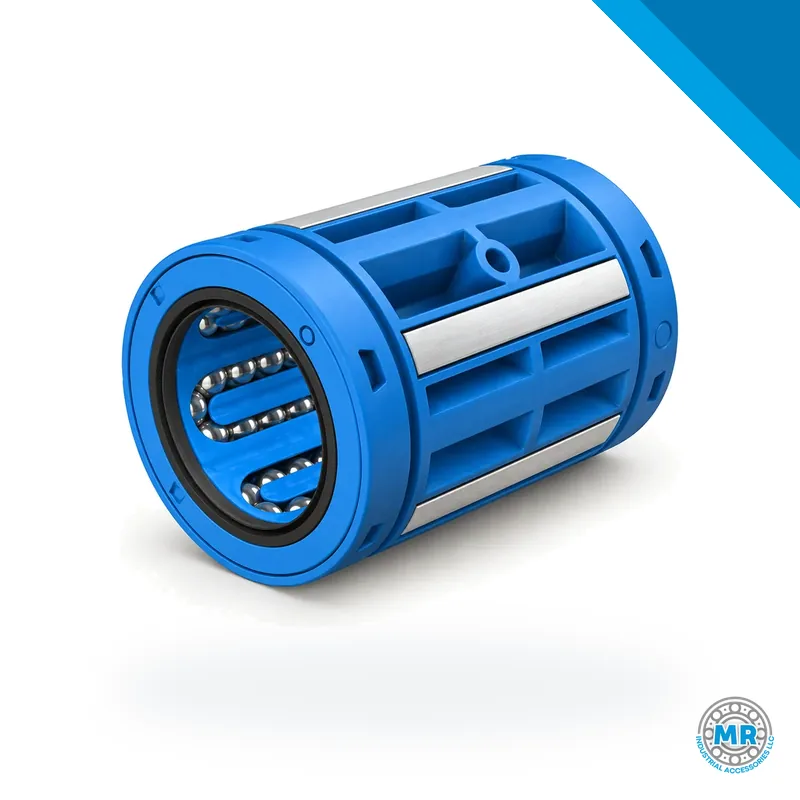

SKF LBCR 20 D-LS/HV6 linear motion
- Brand
- SKF
- Category
- Linear motion
- Subcategory
- Linear motion
We reply promptly.
Tell us the quantity you need and request a quote by WhatsApp or email.
Can't find the exact model? Tell us the part number or model you need. We'll track it down and quote it, whether or not it appears in our catalog.
Description
SKF LBCR 20 D-LS/HV6 belongs to linear motion, part of our Linear motion range. Tell us how many you need by WhatsApp or email and we'll get back to you promptly with a quote for LBCR 20 D-LS/HV6 and any equivalents.
The SKF LBCR D-LS/HV linear module is a ball carriage designed for linear guides, delivering smooth and accurate travel under high loads. It suits machine tools, automation equipment and handling systems that demand rigidity and repeatability. MR Industrial Accessories supplies this line as part of its linear motion range and offers technical guidance to match the right configuration to your application.
Reading the LBCR code is straightforward when you break it into parts. The letters LBCR denote the SKF linear module family, and the digits that follow give the size. For instance, in LBCR 20 D-LS/HV6, the 20 is the module size. The suffixes add detail: D typically signals a sealing or construction variant, LS points to a lateral seal type, and HV relates to a precision or preload class. Because these combinations can vary, it is best to check SKF technical documentation or ask MR for help interpreting a specific code.
These modules are found in operations that call for precise, repeatable linear movement. They appear in machine tools, machining centers, automation equipment, manipulators, cutting and welding systems, and in food or pharmaceutical settings where cleanliness and low maintenance matter. They also serve in transport and positioning tasks on production lines. Their design handles loads from multiple directions while maintaining accuracy over the service life.
When selecting a module, consider load capacity, required rigidity, precision and the operating environment. The LS seal keeps contaminants out and lubricant in, so confirm it suits your conditions. Preload and clearance affect both precision and rigidity. During installation, check guide alignment and rail parallelism to prevent parasitic loads. Use the lubricant specified by the manufacturer and renew it according to use. Careful assembly contributes to a longer service life.
SKF linear modules can often be exchanged with those from other makers that follow the same standardized dimensions, but tolerances, load capacity, and sealing and precision suffixes must be verified. Not every product is directly interchangeable; a difference in preload or sealing can change performance. Always validate compatibility with a specialist before replacing a component.
To request a quote for an SKF LBCR series linear module, send the complete part number, such as LBCR 20 D-LS/HV6, via WhatsApp or email. MR Industrial Accessories will respond promptly and help you find the right solution for your application.
Dimensions
Dimensions and tolerances: Message us the part number on WhatsApp and we'll verify its dimensions and version with the manufacturer's datasheet.
Frequently asked questions
- What do the D-LS/HV suffixes indicate in the LBCR code?
- The suffixes describe module features: D may be a design variant, LS a lateral sealing type, and HV a precision or preload class. For an accurate reading, consult SKF technical documentation or contact us with the full part number.
- How do I choose the correct size of linear module?
- Size depends on the required load, speed and precision. The number in the code (for example, 20) indicates the size. Verify load capacity and guide dimensions. Our technical team can advise you based on your application data.
- Are SKF modules interchangeable with other brands?
- They can be interchangeable if they share standardized dimensions, but tolerances, preload and sealing must be checked. Not all products are equivalent. We recommend validating compatibility before replacing a component to avoid failures.