
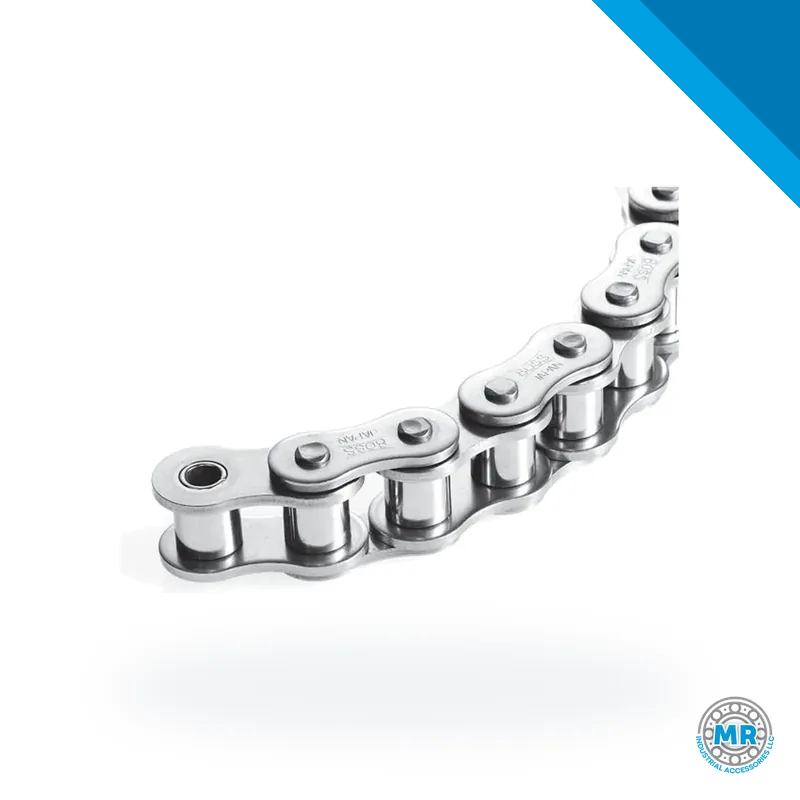

TSUBAKI RS60-LMD-NEP-1 roller chain
- Brand
- TSUBAKI
- Category
- Power transmission
- Subcategory
- Roller chains
- Size
- ASA 60
We reply promptly.
Tell us the quantity you need and request a quote by WhatsApp or email.
Can't find the exact model? Tell us the part number or model you need. We'll track it down and quote it, whether or not it appears in our catalog.
Description
TSUBAKI RS60-LMD-NEP-1 belongs to roller chain, part of our Power transmission range. Tell us how many you need by WhatsApp or email and we'll get back to you promptly with a quote for RS60-LMD-NEP-1 and any equivalents.
When moisture, washdowns or chemical agents attack a drive, the TSUBAKI RS series chain with LMD-NEP finish is built to handle it. This ANSI chain has treated plates, pins and bushings to resist oxidation while maintaining its tensile capacity. It suits equipment that sees frequent cleaning, constant humidity or exposure to chemicals, and it can replace standard chains that rust too quickly.
The code tells you what you are working with. RS is the ANSI roller chain family. The number after it—40, 50, 60, 80, 100, 120 or 140—sets the pitch and strength; larger numbers mean a bigger pitch and more load capacity. LMD refers to the treatment on the plates, and NEP to the treatment on pins and bushings. The final digit is the strand count: 1 for single. So RS60-LMD-NEP-1 is a single-strand chain with pitch 60 and anti-corrosion protection on plates, pins and bushings.
You will find these chains in food and beverage plants with water and detergent washdowns, industrial laundries, cooling tunnels and packaging lines in high humidity. They also show up in surface treatment where acidic or alkaline conditions degrade plain carbon steel, and in port or outdoor equipment. Common applications include meatpacking, dairy, wineries and canning operations where chemical cleaning is routine.
To select the right chain, consider pitch, number of strands and length in pitches. Make sure the sprockets match the ANSI pitch and that the anti-corrosion treatment also covers the rollers. During installation, align the sprockets with a straightedge or laser, set tension to the recommended sag, and do not skip lubrication: in corrosive settings, use a grease or oil that clings and is not washed away by water. Inspect bushing and pin wear before the chain jumps.
ANSI chains of the same pitch are dimensionally interchangeable between manufacturers as long as pitch, roller type and strand count match. However, anti-corrosion treatments and internal materials differ, so a standard chain will not perform the same in a corrosive environment. When replacing an existing chain, compare the full code and length; if you are unsure, send us the old code and we will check it.
To request a quote for a TSUBAKI RS LMD NEP chain, message us on WhatsApp with the complete code—for example RS80-LMD-NEP-1—and the number of pitches or length in meters. We reply promptly with the option that fits your equipment. We can also help with sprocket selection and lubrication so the drive lasts in your operating environment.
Dimensions
Dimensions and tolerances: Message us the part number on WhatsApp and we'll verify its dimensions and version with the manufacturer's datasheet.
Frequently asked questions
- What does LMD-NEP mean on a TSUBAKI chain?
- LMD-NEP is the anti-corrosion treatment applied at the factory: the plates get one protection and the pins and bushings another, designed for humid or chemical environments. It does not change the pitch or tensile capacity.
- How do I request a quote for an RS LMD NEP chain?
- Send the complete code on WhatsApp, such as RS60-LMD-NEP-1, and the number of pitches or length you need. If you do not have the code, provide the pitch, strand count and a photo of the old chain. We will reply promptly with an available option.
- Can a standard chain be replaced by an LMD-NEP one?
- Yes, if pitch, strand count and roller type match. The LMD-NEP version resists corrosion better and lasts longer in humid or washdown environments. Also check that the sprockets are in good condition to avoid shortening the life of the new chain.