
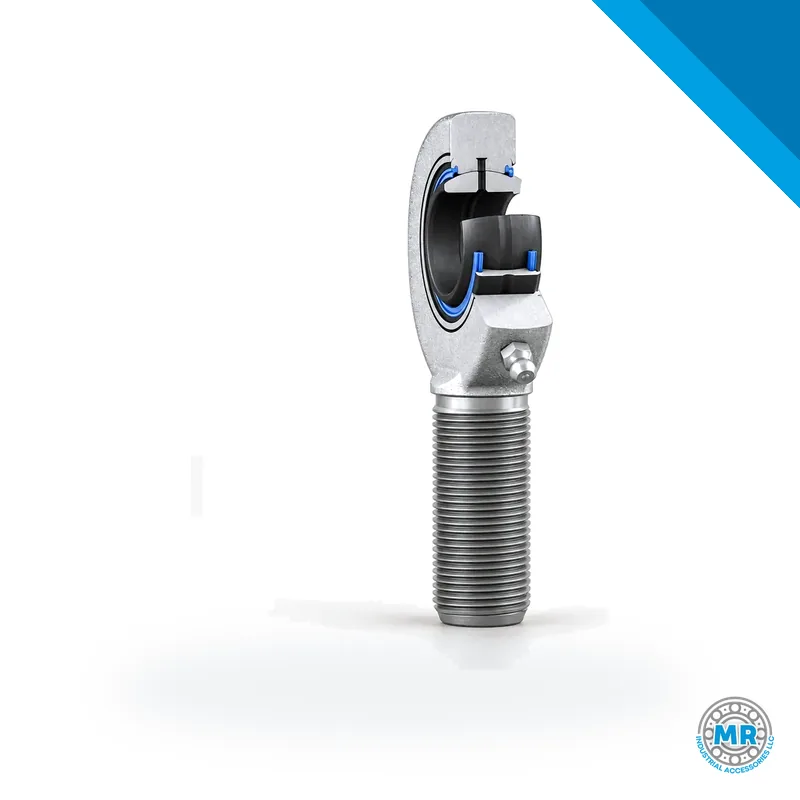

SKF SA 30 C spherical plain bearing
- Brand
- SKF
- Category
- Bearings
- Subcategory
- Spherical plain bearings and rod ends
We reply promptly.
Tell us the quantity you need and request a quote by WhatsApp or email.
Other brands for this category
Ask us for alternatives. We check every equivalent against the part number and your application.
Can't find the exact model? Tell us the part number or model you need. We'll track it down and quote it, whether or not it appears in our catalog.
Description
SKF SA 30 C belongs to spherical plain bearing, part of our Bearings range. Tell us how many you need by WhatsApp or email and we'll get back to you promptly with a quote for SA 30 C and any equivalents.
When a linkage has to pivot and absorb misalignment at the same time, SKF SA...C rod ends and spherical bearings are one of the options maintenance teams reach for. They show up in steering and suspension work, on actuators, and in any mechanism that needs movement under load. MR Industrial Accessories supplies this SKF line and helps buyers pin down the right reference.
Reading the code is the fastest way to narrow the list. The letters SA tell you the shank is male and threaded. The digits after them give the bore in millimeters, so SA 6 C is a 6 mm bore and SA 12 C is a 12 mm bore. The trailing C marks a variant inside the series, tied in most cases to the sealing arrangement or the cage material. Metric sizes from SA 6 C up to SA 25 C cover the range most often seen on industrial and automotive equipment.
Typical homes for these parts include vehicle steering and suspension links, hydraulic and pneumatic cylinder ends, gate and door hardware, farm machinery and automated lines. Wherever a joint must tolerate angular offset while it moves, a rod end of this type is a common answer. They are also widely found on road equipment and harvesting machines, where a sturdy articulation that is easy to service is preferred.
Selection comes down to three things: bore size, thread style and the load the joint will see. Sealing deserves attention as well, since a sealed version keeps dust and moisture away from the bearing surfaces. If the joint is not maintenance-free, plan on regular lubrication. At assembly, check that everything lines up and keep the rod end working in its intended oscillating motion rather than under bending stress.
Interchange is possible with rod ends from other makers that use the same dimensional designation, but tolerances, thread and sealing type should be checked first, because variants are not always built the same way. Comparing the full designation against the actual service conditions is the reliable route, and our team can walk you through that comparison.
Have the part number ready? Send it over WhatsApp or email and we will prepare your quote. If you are torn between a sealed and an open version, or you need help working out the correct designation for your application, tell us what the joint has to do and we will point you in the right direction.
Dimensions
Dimensions and tolerances: Message us the part number on WhatsApp and we'll verify its dimensions and version with the manufacturer's datasheet.
Frequently asked questions
- What does the C at the end of an SKF SA...C rod end mean?
- It identifies a construction variant within the SA series, usually linked to the seal or the cage. Bore diameter and thread stay the same. Check the full designation with us if you need the exact detail.
- SA or SAB: which one fits my setup?
- SA rod ends come with a male threaded shank; SAB types generally use a female shank. What decides it is the mounting space and the connection you need. Send us the dimensions and how it will be used, and we will advise.
- How often should these joints be lubricated?
- That varies with the application, the load and the working environment. Harsh conditions call for more frequent lubrication, while a sealed unit tends to need less attention. Follow the equipment maker's schedule and inspect the seal regularly.