
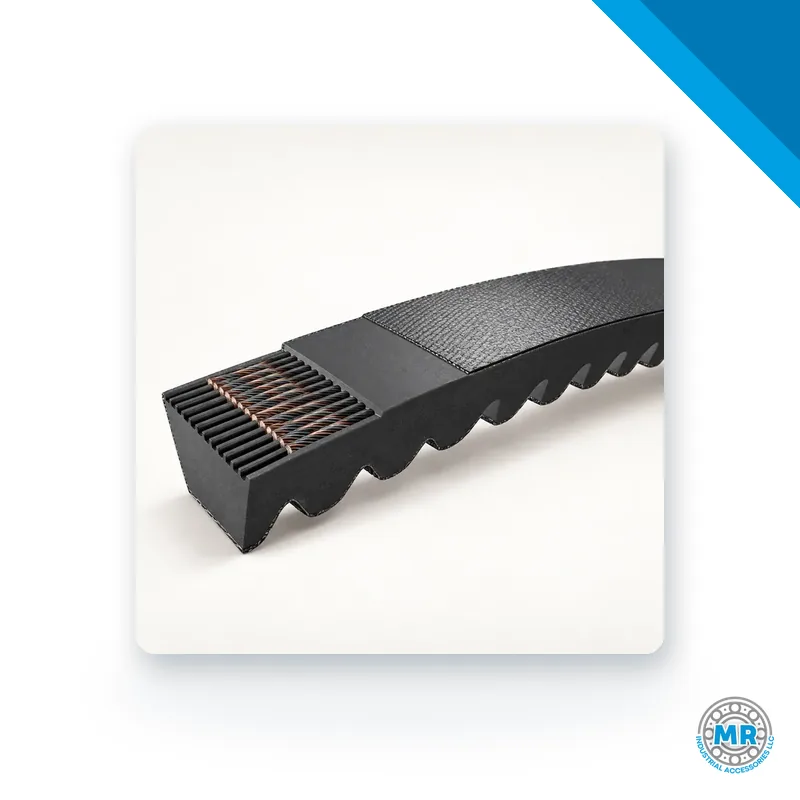

SKF PHG D-200-XL-037 timing belt
- Brand
- SKF
- Category
- Power transmission
- Subcategory
- Timing belts
We reply promptly.
Tell us the quantity you need and request a quote by WhatsApp or email.
Can't find the exact model? Tell us the part number or model you need. We'll track it down and quote it, whether or not it appears in our catalog.
Description
SKF PHG D-200-XL-037 belongs to timing belt, part of our Power transmission range. Tell us how many you need by WhatsApp or email and we'll get back to you promptly with a quote for PHG D-200-XL-037 and any equivalents.
When a drive has to keep two shafts turning in step, a toothed belt like the SKF PHG D-XL series is often the simplest answer. It grips the pulley teeth instead of relying on friction, so there is no slip and no oil can to check. MR Industrial Accessories LLC supplies these belts as part of its power transmission range for maintenance and purchasing teams in the US and Latin America.
Reading the code tells you everything you need before ordering. Take PHG D-200-XL-025: PHG D is the family name for the trapezoidal tooth shape, 200 gives the pitch length in tenths of an inch, XL sets both the pitch and the tooth profile, and 025 is the width in inches. The same logic applies to PHG D-210-XL-031, which works out to a 21 inch pitch, XL profile and 0.31 inch width. With that pattern in hand, a replacement can be matched without guesswork.
These belts show up in machine tools, packaging lines, industrial printers, positioning systems and drives that feed several shafts at once. Food, textile and automotive plants also use them where camshafts or drive shafts must stay synchronized. They run quietly at moderate and high speeds and need no lubrication, which helps in dusty or damp areas.
Selection comes down to three inputs: the power being transmitted, the rotation speed and the distance between shaft centers. The pulleys must share the belt's pitch and profile, or the teeth will not mesh properly and the belt will not last. Tension matters too. A belt that is too loose will jump teeth, while one that is too tight loads the bearings. Set pulley alignment with a straightedge or laser to keep wear even.
No lubricant belongs on a timing belt, and oil or grease should be wiped off since it can attack the compound. A dry cloth is enough for routine cleaning. In extreme temperature environments, check the manufacturer's specifications. Belts from different brands can be swapped when pitch, profile and width line up, but confirm the full designation first.
Send the complete part number by WhatsApp or email and the team will quote it, suggest equivalents and help you confirm the right choice.
Dimensions
Dimensions and tolerances: Message us the part number on WhatsApp and we'll verify its dimensions and version with the manufacturer's datasheet.
Frequently asked questions
- How do I break down a designation like PHG D-200-XL-025?
- PHG D is the belt family, 200 is the pitch length in tenths of an inch, so 20 inches, XL is the tooth profile and pitch, and 025 is the width in inches, or 0.25 inches.
- Can a timing belt take the place of a chain or gears?
- Often yes. Belts run quieter and need less upkeep than chains, and they can link shafts that sit far apart, which gears cannot do. Check the load capacity and the working conditions before switching.
- What is the right way to check tension?
- With the belt installed, pressing a finger at the middle of the longest span should give a slight deflection. Teeth jumping mean it is too loose, and hot bearings mean it is too tight. The machine manual is the final reference.