
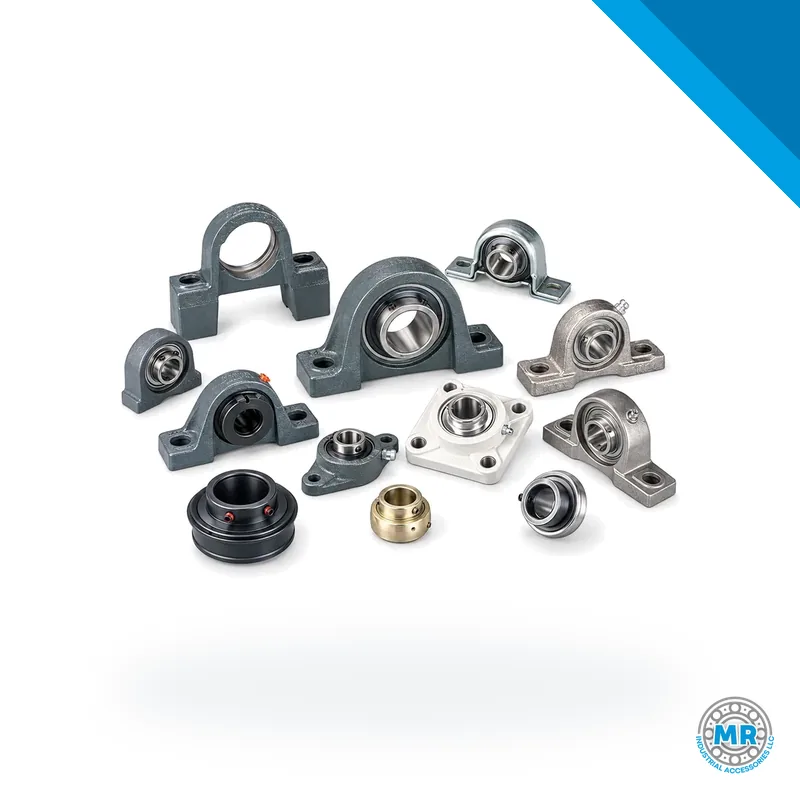

PEER UCP206-19 pillow block bearing
- Brand
- PEER
- Category
- Bearing housings
- Subcategory
- Y-bearing unit
We reply promptly.
Tell us the quantity you need and request a quote by WhatsApp or email.
Other brands for this category
Ask us for alternatives. We check every equivalent against the part number and your application.
Can't find the exact model? Tell us the part number or model you need. We'll track it down and quote it, whether or not it appears in our catalog.
Description
PEER UCP206-19 belongs to pillow block bearing, part of our Bearing housings range. Tell us how many you need by WhatsApp or email and we'll get back to you promptly with a quote for UCP206-19 and any equivalents.
This pillow block assembly pairs a cast iron housing with a PEER insert ball bearing, giving you a ready-to-mount support for rotating shafts. It suits equipment that needs straightforward fixing and reasonable alignment. MR Industrial Accessories supplies this line to industrial buyers across the United States and Latin America.
Reading the UCP code is the quickest way to match a unit to your shaft. The letters stand for the pillow block housing with insert bearing, and the digits after them carry two pieces of information. The first part (201, 202, and so on) points to the insert bearing series, while the number following the hyphen gives the shaft diameter in inches. For reference: UCP201-8 fits a 1/2" shaft, UCP202-9 a 9/16" shaft, UCP203-11 an 11/16" shaft, UCP204-12 a 3/4" shaft, UCP205-13 a 13/16" shaft, and UCP205-14 a 7/8" shaft. Once you know that pattern, you can read most codes on sight.
You will find these units in conveyor lines, grain elevators, and machinery for food processing, textiles, woodworking, and packaging. They also show up in irrigation systems, fans, mixers, and belt conveyors. The pillow block shape makes bolting to metal or concrete straightforward, and the insert bearing absorbs small misalignments, so shafts that are not perfectly true are easier to install.
Selecting the right unit comes down to three inputs: shaft diameter, the nature of the load (radial, axial, or a combination), and where the unit will operate. Insert bearings typically arrive pre-lubricated and fitted with seals that hold grease in and keep dust and moisture out. When mounting, make sure the support surface is clean and flat, tighten the fixing screws to the recommended torque, and align the shaft at the start to avoid unnecessary stress and extend the life of the assembly. In very damp or particle-heavy environments, add extra protection.
Interchangeability is common in this product family because UCP housings from different makers often share standardized dimensions. To replace an existing unit, locate the full code on the housing or measure the shaft diameter and the distance between the fixing holes. Send that information and we will quote the equivalent reference or the one that fits your equipment best.
To request a quote for a UCP housing with PEER insert bearing, message us on WhatsApp with the code or your shaft measurements. We will confirm the exact reference and help you make sure the unit performs correctly in your application.
Dimensions
Dimensions and tolerances: Message us the part number on WhatsApp and we'll verify its dimensions and version with the manufacturer's datasheet.
Frequently asked questions
- What does the code UCP201-8 mean?
- UCP identifies a pillow block housing with insert bearing. The 201 refers to the insert series, and the -8 suffix gives the shaft diameter in inches (1/2"). The same pattern applies to UCP202-9, UCP203-11, UCP204-12, UCP205-13, and UCP205-14.
- How do I choose the right UCP housing for my shaft?
- Measure the shaft diameter and check the code on the old housing. Also consider the load type and operating conditions. With that data, we will quote the PEER unit that matches your size and application.
- Are UCP housings from different brands interchangeable?
- Often yes, because they follow standardized dimensions. If you have a code from another brand, send it to us and we will identify the equivalent PEER reference. We can also help if you only have shaft and base measurements.