
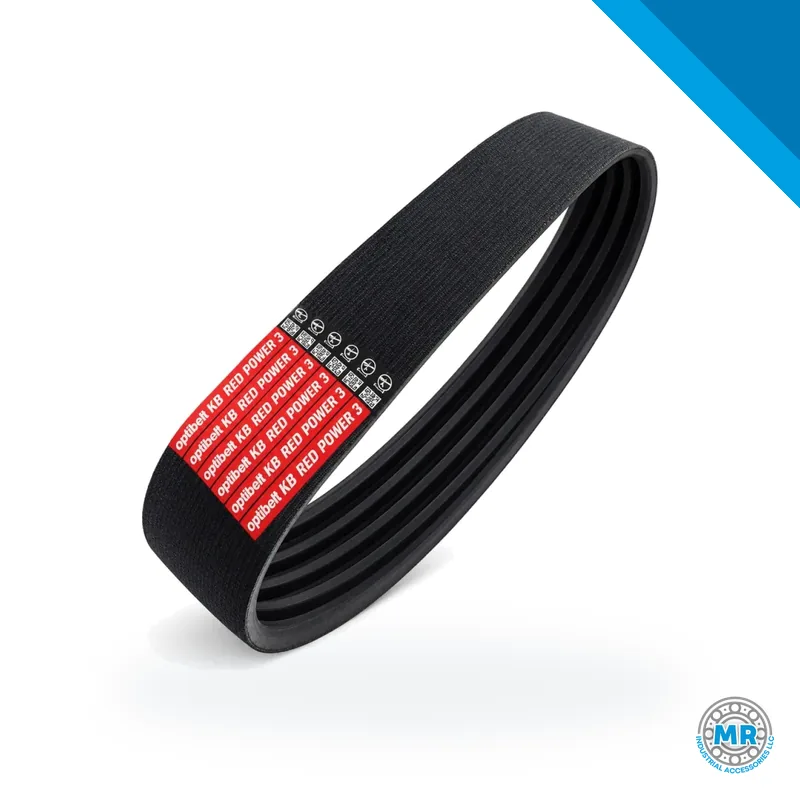

V-belt Optibelt SPB KB 5000 RP
- Brand
- OPTIBELT
- Category
- Power transmission
- Subcategory
- V-belts
- Series
- KB Red Power 3
We reply promptly.
Tell us the quantity you need and request a quote by WhatsApp or email.
Can't find the exact model? Tell us the part number or model you need. We'll track it down and quote it, whether or not it appears in our catalog.
Description
OPTIBELT SPB KB 5000 RP belongs to v-belt, part of our Power transmission range. Tell us how many you need by WhatsApp or email and we'll get back to you promptly with a quote for SPB KB 5000 RP and any equivalents.
The Optibelt SPB KB 5000 RP is a banded V-belt from the KB Red Power 3 series, with a length of 5000 mm. Before you fit it, inspect the drive and sheaves so the new belt runs true from the start.
Check sheave grooves for wear, rust, or embedded debris. Worn grooves let a banded V-belt sit too deep, so it slips and wears fast. Clean the grooves and confirm the sheaves are aligned and tight on the shafts.
Look at the whole drive: bearings, bushings, and any idler or tensioner. A bad bearing or a seized idler will damage a new belt quickly. Set tension to the drive maker's spec, then recheck after the first run-in.
The SPB KB 5000 RP is a banded V-belt, so all ribs work as one unit. Replace the full set when one belt in a multi-belt drive is worn, and keep the sheaves matched. Send the part number SPB KB 5000 RP by WhatsApp or email for a quote.
Dimensions
- Length
- 5000mm
Frequently asked questions
- What should I check before fitting the SPB KB 5000 RP?
- Inspect the sheave grooves for wear, rust, or debris, and confirm the sheaves are aligned and secure. Check bearings, bushings, and idlers for play or roughness, and clean the grooves before the belt goes on.
- How do I request a quote for this belt?
- Send the part number SPB KB 5000 RP by WhatsApp or email. The team replies promptly and can confirm the right belt for your drive.
- Should I replace banded belts one at a time?
- No. On a multi-belt drive, replace the full set so all belts share the load evenly. Mixing a new belt with worn ones can overload the new belt and shorten its life.