
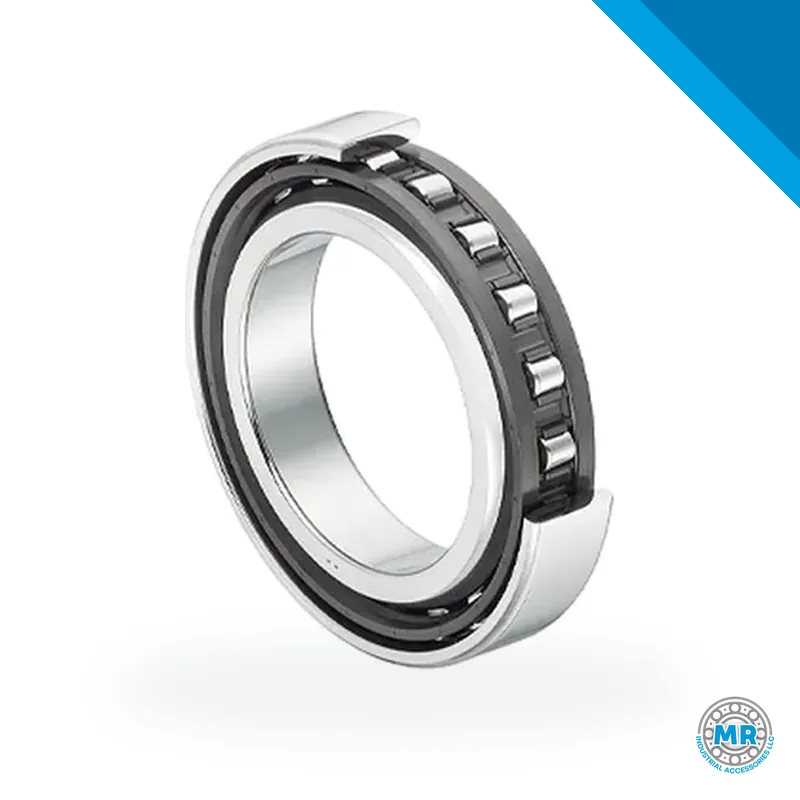

NTN N1020HSRT6K cylindrical roller bearing
- Brand
- NTN
- Category
- Bearings
- Subcategory
- Cylindrical roller bearings
We reply promptly.
Tell us the quantity you need and request a quote by WhatsApp or email.
Can't find the exact model? Tell us the part number or model you need. We'll track it down and quote it, whether or not it appears in our catalog.
Decoding NTN N1020HSRT6K
- N 10Series
- Cylindrical roller bearings, N 10 series. Series differ in outside diameter and width even when the bore is the same.
- 20Bore
- Bore 100 mm (20 × 5).
- HSRT6KSuffix
- NTN suffix: identifies the variant, such as seals or shields, cage, internal clearance or other features.
N 1020 is the standard ISO basic designation, which sets the bearing type, series and bore.
Description
NTN N1020HSRT6K belongs to cylindrical roller bearing, part of our Bearings range. Tell us how many you need by WhatsApp or email and we'll get back to you promptly with a quote for N1020HSRT6K and any equivalents.
When you need a bearing that handles heavy radial loads at speed, the NTN cylindrical roller bearing is a solid choice. Its cylindrical rollers and steel cage stand up to tough industrial conditions. You will find it in heavy machinery, transmission equipment and systems where load capacity and rigidity matter. MR Industrial Accessories supplies this line to customers across the United States, Canada, Mexico and South America, and our team can help you pick the right version for your application.
The part number tells you a lot about the bearing. Take N1009HSRT6K: the first letter N means a single-row cylindrical roller bearing with two ribs on the inner ring and none on the outer ring, so it allows axial displacement. The number that follows is the dimension series. The HSRT suffix points to a special high-speed, high-temperature execution, and the final K means a tapered bore. The middle number relates to the bore diameter. You will see the same pattern in N1016HSRT6K.
These bearings are common in steel mills, cement plants, mining operations and machine tool spindles. They also appear in gearboxes, pumps, compressors and power transmission equipment. Their ability to take high radial loads and their rigidity make them suitable for high-speed spindles and other precision applications.
When selecting, consider radial load, rotation speed and the environment. Protection against dust and moisture is important. Proper lubrication, whether grease or oil, helps extend service life. If the bore is tapered, mounting requires a controlled interference fit, often with an adapter sleeve. Make sure supports are aligned to avoid extra stresses. In high-speed applications, check internal clearance and cage precision.
If you are looking for equivalents from other brands, compare the main dimensions and the execution type. A cylindrical roller bearing with the same basic designation may be interchangeable, but check the suffixes for cage, heat treatment or tolerances. Suffixes are not always equivalent between manufacturers. If you are unsure, send us the original code and we will advise you.
To request a quote for your NTN cylindrical roller bearing, send the code or the size you need via WhatsApp or email. We will get back to you promptly and suggest a compatible alternative if applicable.
Dimensions
- Bore
- 100mm
Frequently asked questions
- What does the K suffix in the designation mean?
- The K suffix indicates a tapered bore, generally with a 1:12 taper. This allows mounting with an interference fit on tapered shafts or with adapter sleeves, which makes disassembly easier and ensures a firm fixation.
- Does this bearing support axial loads?
- Cylindrical roller bearings with the N configuration, such as this series, are not designed for significant axial loads. They are used mainly for radial loads. For combined loads, you need an arrangement with other bearings that absorb axial thrust.
- How do I choose between a steel cage and a bronze cage?
- The steel cage is standard and works for most applications. The bronze cage is preferred under high-speed conditions, high temperatures or when greater fatigue resistance is needed. The choice depends on your specific operating conditions.