
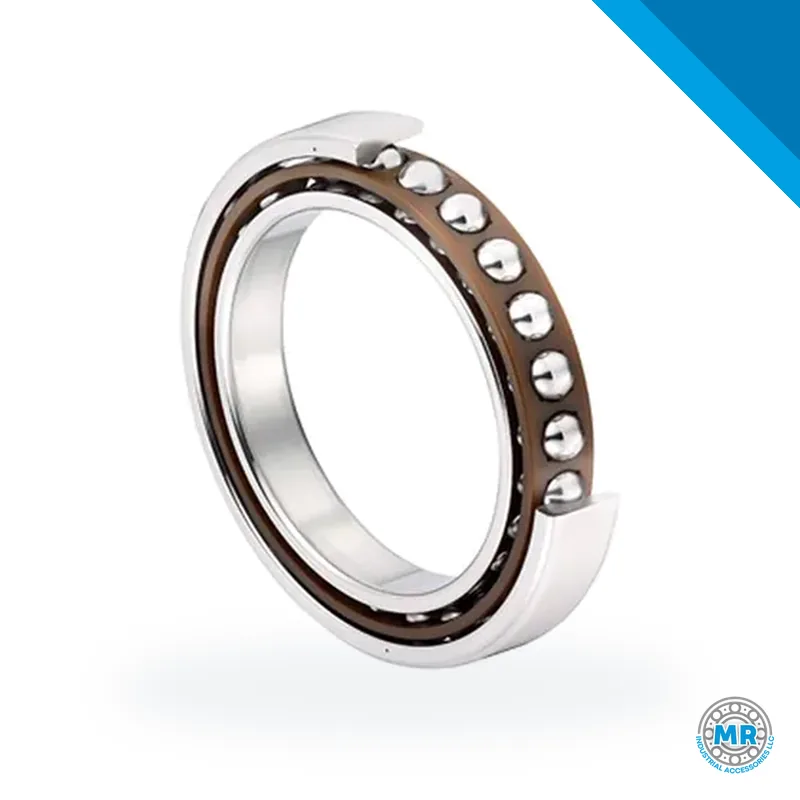

NTN 5S-7901CDLLB angular contact ball bearing
- Brand
- NTN
- Category
- Bearings
- Subcategory
- Angular contact ball bearings
We reply promptly.
Tell us the quantity you need and request a quote by WhatsApp or email.
Can't find the exact model? Tell us the part number or model you need. We'll track it down and quote it, whether or not it appears in our catalog.
Description
NTN 5S-7901CDLLB belongs to angular contact ball bearing, part of our Bearings range. Tell us how many you need by WhatsApp or email and we'll get back to you promptly with a quote for 5S-7901CDLLB and any equivalents.
For machine tool spindles, grinding heads and positioning systems that demand both accuracy and speed, the NTN 5S-7000CDLLB series angular contact ball bearings are a common choice. They handle combined radial and axial loads, and the series covers several bore sizes within the 7000 range. If you already have the code or the dimensions, our team can quote the reference you need.
Reading the part number helps you confirm you are ordering the right variant. The 5S prefix points to a high-precision execution. The four-digit base number, such as 7000, 7001 or 7002, sets the size and load capacity. CD covers the contact angle and internal design, while LLB identifies the seal or cage type. Putting it together, a 5S-7000CDLLB is a 7000-series angular contact bearing with specific precision and lubrication features.
Typical installations include milling machine heads, grinding machines, measuring equipment and high-precision positioning systems. They also show up in robotics and optical equipment. The metalworking, automotive and capital goods sectors rely on them where rigidity and rotational accuracy matter. Because they are built to run at high speeds, they suit assemblies where heat and friction need to stay low.
When selecting a bearing, review the axial and radial loads it will see, the rotation speed and the operating environment. Mounting calls for precise alignment and the right preload to keep the assembly rigid. Use the lubrication specified for high-speed operation, and remember that the LLB seal helps keep contaminants out. If you mount bearings in pairs, control the axial clearance carefully. Careful installation makes a difference in service life.
NTN angular contact bearings can be interchanged with other brands that follow the same international nomenclature, such as SKF, FAG or NSK, provided dimensions and tolerances match. The 7000, 7200 and 7300 series are standard, and suffixes indicate cage, seal or precision variants. For a replacement, the code engraved on the old bearing is your best starting point to find an exact equivalent.
Send us the code or the size of your angular contact bearing on WhatsApp, and we will quote it promptly. Our team can also suggest equivalents and help you choose the right reference for your application. If you do not have the code, share the application details or the original part information, and we will assist you in identifying it.
Dimensions
Dimensions and tolerances: Message us the part number on WhatsApp and we'll verify its dimensions and version with the manufacturer's datasheet.
Frequently asked questions
- What does the CDLLB suffix mean on an NTN bearing?
- The CDLLB suffix covers design details such as the contact angle and the seal or cage type. To interpret it correctly, check the full designation against the manufacturer's technical specifications. If you have doubts, send us the code and we will help you identify it.
- Are these bearings suitable for high speeds?
- Yes, 5S-7000CDLLB series angular contact bearings are made for high-speed and precision applications, such as machine tool spindles. Their design reduces friction and heat, allowing stable operation. Select the right lubrication and control preload during mounting.
- How do I request a quote for a specific NTN bearing?
- Write to us on WhatsApp with the complete bearing code or the dimensions you need. We quote promptly and advise you so you choose the correct reference. If you do not have the code, we can help you identify it from the application or the original part.