
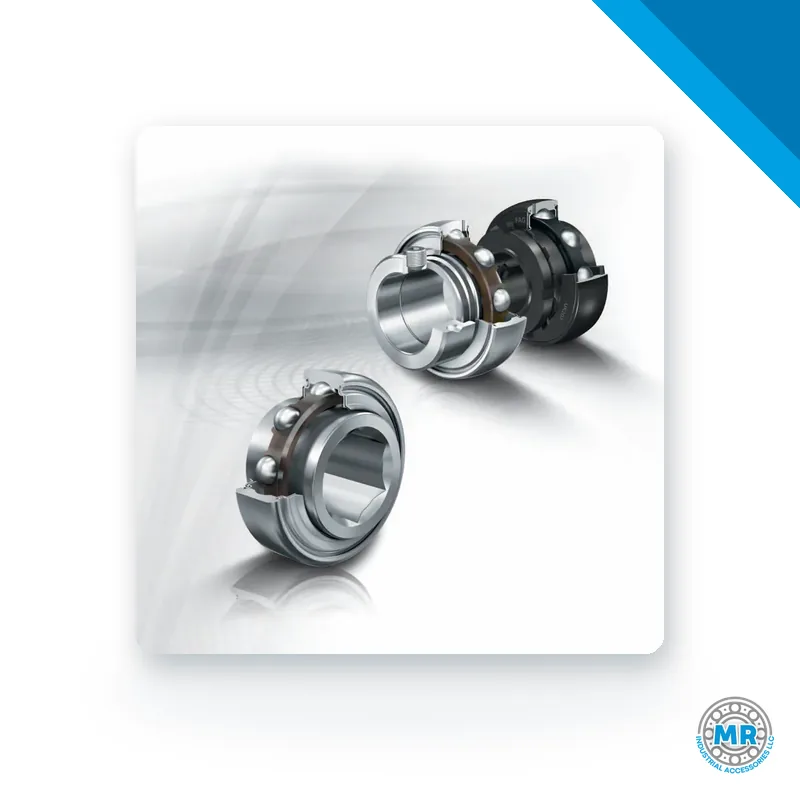

INA SK104-207-KTT-B-L402/70 y-bearing (insert bearing)
- Brand
- INA
- Category
- Bearings
- Subcategory
- Y-bearing (insert bearing)
We reply promptly.
Tell us the quantity you need and request a quote by WhatsApp or email.
Can't find the exact model? Tell us the part number or model you need. We'll track it down and quote it, whether or not it appears in our catalog.
Description
INA SK104-207-KTT-B-L402/70 belongs to y-bearing (insert bearing), part of our Bearings range. Tell us how many you need by WhatsApp or email and we'll get back to you promptly with a quote for SK104-207-KTT-B-L402/70 and any equivalents.
The SK KTT line from INA covers Y-bearing inserts, meaning deep groove ball bearings built with a spherical outer ring and a mechanism for locking onto the shaft. They sit inside split or solid housings, which suits equipment that needs to be lined up and fastened quickly. MR Industrial Accessories supplies these inserts for maintenance and new builds, and helps buyers pin down the exact variant before ordering.
Reading a code such as SK KTT takes a little practice. The letters SK mark the insert family, the digits that follow carry the shaft diameter together with a size code, and KTT describes how the bearing is sealed and fixed. A B suffix points to the outer ring design, while an L plus a number covers machining or tolerance options. Part numbers like SK014-205-KTT-B-L402/70 and SK104-207-KTT-B-L402/70 differ mainly in size, so the manufacturer's data sheet is the reliable place to confirm what a given reference includes.
Typical applications include conveyors, belt drives, elevators, farm equipment, bottling lines and transmission systems in general. Food processing, cement, mining and aggregate operations often run these inserts because the working conditions are hard on bearings. Because the housing splits, replacing and re-aligning an insert along a long shaft is straightforward. MR Industrial Accessories supplies this line both as a replacement part and for new projects.
Choosing the right Y-bearing comes down to three things: shaft diameter, whether the load is radial, axial or combined, and what the surroundings are like. The KTT seal keeps dust and moisture out, though washdown-heavy areas may call for a different design. Shaft fixing is done either with set screws or an adapter sleeve, depending on the model. When mounting, verify that the housing is aligned and never hammer on the outer ring. Use the lubricant the manufacturer specifies and refresh it on the maintenance schedule.
Interchange with other brands is possible when the dimension standard matches, but suffix letters and fixing methods are not consistent from one maker to another, so the part number alone is not enough. The safer route when replacing a Y-bearing is to compare the critical dimensions: shaft diameter, outer diameter, width and seal type. If anything is unclear, the MR team can help identify the correct variant.
To request a Y-bearing insert from the SK KTT series, send the complete part number or your shaft measurements over WhatsApp or email. The team replies promptly, can suggest equivalents, and will quote the design that fits your application.
Dimensions
Dimensions and tolerances: Message us the part number on WhatsApp and we'll verify its dimensions and version with the manufacturer's datasheet.
Frequently asked questions
- What does the SK KTT designation mean on a Y-bearing?
- SK is the insert family, the numbers that follow give the shaft diameter and size, and KTT covers sealing and fixing. B and L suffixes indicate design variants. Send us the full part number on WhatsApp and we will confirm what it includes.
- How do I choose the appropriate Y-bearing for my application?
- Start with the shaft diameter, then look at the load type and the environment. The KTT seal handles dust and moisture. Check the fixing method and make sure the housing is aligned. If you are unsure, send us your data and we will advise.
- Are INA Y-bearings interchangeable with other brands?
- They can be compatible when the critical dimensions line up: shaft diameter, outer diameter, width and seal type. Suffixes and fixing systems differ between makers, so compare measurements before replacing. Ask us about equivalents.