
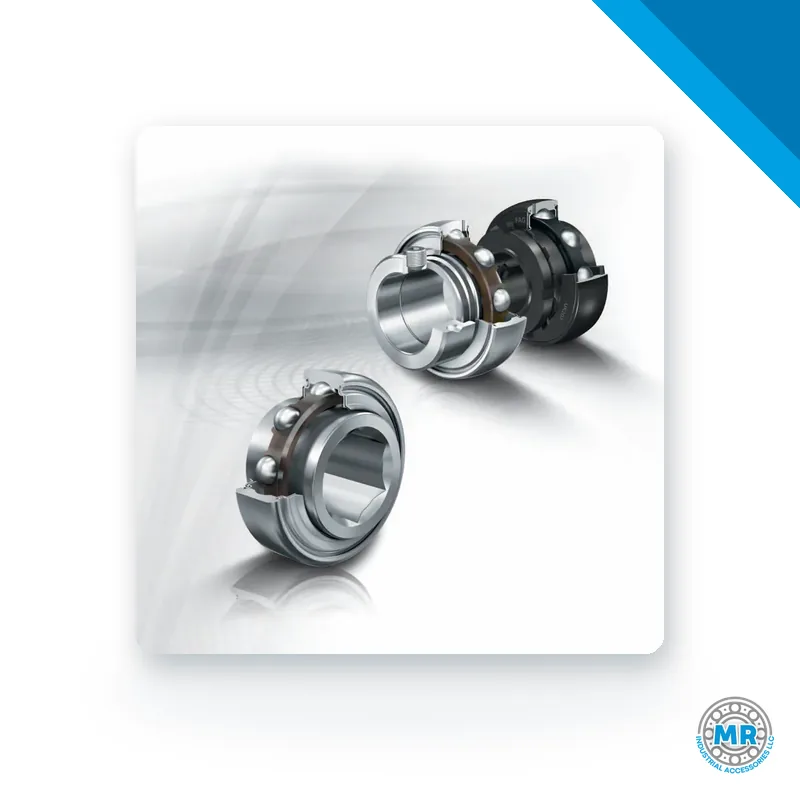
INA 208-XL-KRR y-bearing (insert bearing)
- Brand
- INA
- Category
- Bearings
- Subcategory
- Y-bearing (insert bearing)
We reply promptly.
Tell us the quantity you need and request a quote by WhatsApp or email.
Can't find the exact model? Tell us the part number or model you need. We'll track it down and quote it, whether or not it appears in our catalog.
Description
INA 208-XL-KRR belongs to y-bearing (insert bearing), part of our Bearings range. Tell us how many you need by WhatsApp or email and we'll get back to you promptly with a quote for 208-XL-KRR and any equivalents.
The KRR series from INA covers Y-bearing inserts built with a spherical outer ring and a longer inner ring, so they fit into split plummer block or flanged housings. What sets this line apart is the sealing arrangement together with the way the insert locks onto the shaft. It suits equipment where perfect alignment is not realistic and the shaft still has to carry radial load plus a certain amount of axial load.
Reading the code is straightforward. A three-digit number gives the insert size, and the KRR suffix tells you which seal and locking method the insert uses. The smallest sizes in the line are 202-XL-KRR and 203-XL-KRR, while 210-XL-KRR sits at the larger end. The letters XL mark the current generation. Before picking a code, have two things ready: the shaft diameter and the housing type the insert will sit in.
Typical installations include conveyors, mixers, fans, packaging lines and general process equipment. Food plants, chemical operations and meat processing facilities use them regularly, as do maintenance shops that swap a worn insert and keep the existing housing. Field equipment such as seeders and harvesters is another common application. Because the outer ring is spherical, small misalignments coming from welded frames or sheet metal mountings can be absorbed without reworking the housing.
For a correct match, confirm that the shaft diameter agrees with the code and that the housing accepts the outer ring. The KRR sealing handles dust and splashes, though in heavily contaminated areas it should not be treated as the only barrier. When installing, tighten the locking screws onto the shaft with the right wrench and check that the insert can still move slightly inside the housing. Follow the lubrication interval for the duty cycle and verify shaft alignment to keep parasitic loads out of the bearing.
Inserts from different manufacturers can be swapped when the key dimensions line up: shaft diameter, outer diameter and inner ring width. Sealing style and locking method are where equivalents tend to differ, so compare the full designation rather than the number alone. If the housing is already in place, the simplest route is to reuse the same code or a confirmed equivalent.
To get a quote, send the complete KRR code on WhatsApp. A photo of the insert or housing plus the shaft measurements also works. Our team replies promptly and can suggest equivalents or help you choose the right insert.
Dimensions
Dimensions and tolerances: Message us the part number on WhatsApp and we'll verify its dimensions and version with the manufacturer's datasheet.
Frequently asked questions
- What does the KRR suffix indicate on a Y-bearing?
- It defines the sealing type and the locking system of the insert. In practical terms, the insert comes with contact seals and locks onto the shaft by screws. Send the full code if you want us to confirm the exact variant.
- How do I pick the right Y-bearing for my equipment?
- You need the shaft diameter and the housing type where it mounts. With those two details we can point you to the matching KRR code. If the old insert is still at hand, the number stamped on the outer ring is the quickest reference.
- Can INA Y-bearings be replaced with another brand?
- Yes, provided the main dimensions agree: shaft diameter, outer diameter and width. Sealing and locking designs may differ from one maker to another. Send us the original code and we will confirm a suitable equivalent.